

Australian origin · Clear descriptionNatural opals & distinctive gemsMelbourne, Australia

Know the stone.
Know the origin.

Education is part of the product. AUSTRALORA connects geology, regional identity, gemstone characteristics and clear nomenclature so collectors and clients can make informed decisions.

Coober Pedy Lightning Ridge QLD Boulder Fields New England Central QLD Marlborough Eastern Goldfields Mud Tank
Origin Atlas

Australia — a continent of colour

Explore selected Australian gemstone regions. The map is educational and illustrative rather than a mining-tenement map.

  • OpalSA · NSW · QLD
  • SapphireNSW · QLD
  • ChrysopraseQLD · WA
  • ZirconNT · NSW · QLD
Education · Australian Opal

Three major Australian opal identities

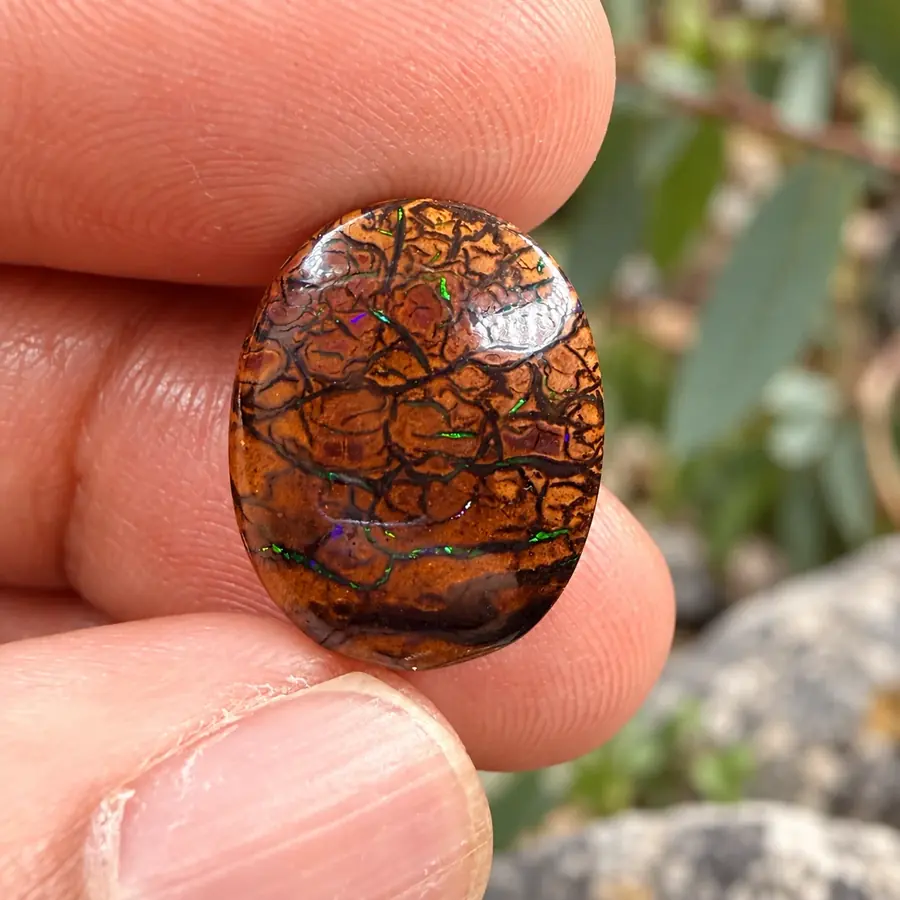
Australian precious opal is not one uniform material story. Coober Pedy is the main producer of white opal and is widely associated with white/light and crystal opal. Lightning Ridge is renowned for black and dark opal. Queensland’s boulder-opal belt produces precious opal naturally associated with ironstone.

Coober Pedy is not boulder opal

AUSTRALORA keeps these categories separate. A boulder opal image or description is not used to represent Coober Pedy stock. When a product is described as Coober Pedy, that field origin should be supported by its source information.

Why red matters

Opal play-of-colour results from the arrangement of silica spheres that diffract light. Geoscience Australia notes that predominantly red play-of-colour is rare, which helps explain why strong red can be highly prized when the overall quality of the stone supports it.

Solid, doublet and triplet

These terms describe construction. AUSTRALORA states the construction clearly so the buyer knows whether a piece contains solid opal or a composite.

Education · Australian Sapphire

Australian sapphire is a palette, not a single blue.

Important Australian sapphire districts include the New England region of New South Wales around Inverell and Glen Innes, and the Central Queensland Gemfields around Anakie, Sapphire and Rubyvale. Australian sapphire occurs in a range of colours including blue, green and yellow.

Why it belongs in the house

Sapphire broadens AUSTRALORA beyond opal while preserving a strong Australian-origin story. Its durability also suits loose-stone supply, bespoke rings and fine jewellery.

Education · Chrysoprase

Australia’s apple-green chalcedony.

Chrysoprase is a green variety of chalcedony coloured by nickel. Australian material is associated with Queensland and Western Australia, and fine stones can show vivid, clean green colour.

Use the terminology carefully

Materials sold under similar trade names are not always true chrysoprase. AUSTRALORA’s approach is to identify the material as precisely as the available information allows.

Education · Natural Zircon

Ancient mineral. Modern brilliance.

Natural zircon occurs in Australian alluvial deposits and can occur alongside sapphire. Geoscience Australia identifies Mud Tank in the Northern Territory as a well-known locality for gem-quality zircon, with gem material also occurring in New South Wales and Queensland.

Not cubic zirconia

Zircon is a natural zirconium silicate mineral. Cubic zirconia is a synthetic zirconium oxide material. They are different materials despite the similarity in their names.

Gem care

Different stones.
Different care.

Care guidance should follow the actual material and construction. Opal, sapphire, chrysoprase and zircon differ in hardness, toughness and sensitivity, so individual product records should carry stone-specific care information.